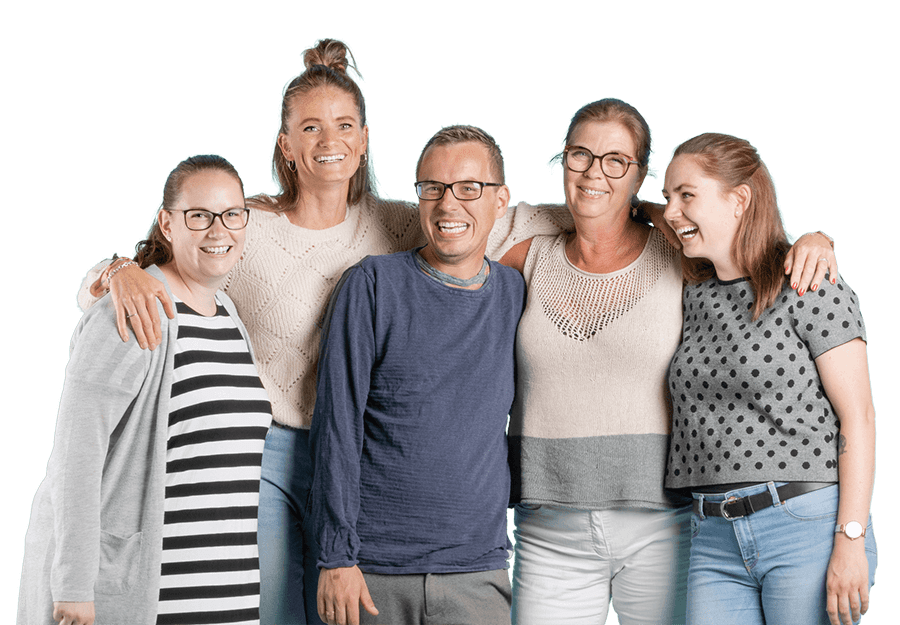


We sat down with the incredible designer, Toni from TLYarnCrafts, to get the inside scoop on the highly anticipated #FrostandBloomCAL.
This six-week journey will guide makers through creating the stunning Aura Lapghan, a perfect winter blanket blending unique style with cozy practicality.
In the Skein and Tell podcast, Toni shared the inspiration behind the design, crucial preparation tips, and even revealed her absolute favorite motif.
Below, you’ll find Toni’s answers to our top 10 questions!
Psst! Do You Prefer to Listen?
Then click play on our latest podcast episode where our incredible host Gea chats with Toni through all ten topics and much, much more!
The Design & Inspiration
1. The CAL is called "Frost and Bloom," but the blanket is the "Aura Lapghan." What’s the story behind the two names?
"When I looked at this finished blanket, the really gorgeous colors, and the fantastic yarn we used, it had this luminescence—this energy around it. 'Aura Lapghan' sat in my brain for a couple of days. I had a few names knocking around, but I would look at it and think: it has an Aura. This energy of 'Grab your blanket, get the comfy spot on the couch, you know, grab your Kindle and get a few chapters in.' It just felt like the kind of blanket I'd want to spend the season with, relaxing and doing all my favorite things.
As for the name 'Frost and Bloom,' it's definitely a winter-themed project. It captures the idea of using these colder months—this time we spend inside in our cozy places—to make our creativity bloom and put it into projects that will last us through the season and every winter to come.
We can reach back and say, 'Yep, that is something I created in the dead of winter,' when it feels like our creativity should dry up and hibernate. But, our creativity actually has an opportunity to shine because we're home, moving a little slower, and everything is a bit more still. So, the Frost and Bloom Crochet-Along is really about embracing the wintertime, but also using it to let our creativity bloom into this beautiful project."

2. What exactly is a "lapghan"?
"I did not come up with it. I cannot take credit. It's a word that I saw kind of floating around when I was searching for small blanket designs.
Now, I personally love the word afghan. I think it's got a lot of history and a lot of tradition, and I think it definitely applies to certain types of blankets. Whereas, a lapghan is like, you know, this really gorgeous heirloom piece, but just smaller size, you know, perfect for one person."
3. Ten unique motifs sounds intense! How do you make sure the project stays approachable for all skill levels?
"We start off a little simpler, and we ramp up that difficulty over time. You're building that confidence and that knowledge and that skill base as you're working on the project. The motifs that you make in week 4 or 5 are much more difficult than what you make in week 1, but it doesn't feel like it, because we've now gone on this journey together of building our skills.
So, that's kind of what I try to do within TLYarnCrafts. Like, 'Yes, I'm going to give you some of those basics, those really soothing stitches, and those quick wins right up front.' But there will also be challenging parts that stretch you outside of your comfort zone, and maybe you encounter a stitch that you haven't tried before, or you're playing around with a color change technique that's new to you."

Preparation and Tips
4. What is your number one tip for makers getting ready to cast on?
"First, practice! Make sure you're very comfortable with your basics—not just how to make the stitches, but how to read them.
We're going to be working with post-stitches and very specific placements to make these motifs come out properly. So, if the pattern tells you to do a front post double crochet and skip a stitch, just do it. Trust the pattern!"
5. Any other crucial advice before we start stitching?
"My other piece of advice is to get comfortable using a tighter gauge. One of the things that makes this blanket really special is that it's meant to last. It's not a big lacy piece. It is a pretty dense, yet still very flexible and comfortable fabric, worked on a smaller gauge.
That structure helps a lot with durability and keeps the blanket nice and warm. But, since we're working with a yarn that has some breathability, it stays comfortable. So, get used to that tighter tension—maybe make a small amigurumi project or a simple washcloth with a tighter gauge than you would normally use."
6. Let’s talk assembly. Do you have any wisdom to share on managing all those ends?
"One overarching piece of advice—and I'm saying it out loud for the record—is please weave in your ends as you go.
I know it can be a sticking point. But after crocheting for so long, I’ve gotten past my aversion to it. It is a means to an end for a beautiful project. Yes, there are a lot of ends, but it's worth it for what we're creating here.
Make all your motifs for that week, then weave in the ends so they are ready for assembly. I'll be honest: I don't always take my own advice, but I always regret it. Every single time I skip my ends, I regret it."

7. Seaming can be a pain. How did you make the joining process as painless as possible?
"One of the things that I did was we're using a crochet join versus like a sewn join. I personally am a big fan of whip stitching my projects together, but with so many seams to connect, that would take absolutely forever with this project. So, I was like, 'I am not going to subject people to that.'
Instead, we're just going to do a crochet slip stitch to make all of our joins. And then in the pattern, I do break down the order of how we should seam these pieces together, because there are like some longer joins and then there are some shorter joins.
So, we focus on the shorter joins first, and then we can do the longer joins. And if anything, doing those longer joins then feels more satisfying because it feels like you're zipping through the project a whole lot faster."
Yarn, Choice, and Favorites
8. Let's talk yarn! Why was this cotton-wool blend the perfect match for the Aura Lapghan?
"I think the yarn we use in this project ends up being the main character. It really is the star. It takes the project from an everyday motif blanket to heirloom quality—something you're going to keep close for generations.
The wool was definitely necessary. But I recognize that if you're having a marathon crochet session, your temperature might fluctuate, so you don't want something overly warm or stifling. That is where the cotton allows your skin to breathe. Another amazing quality is the mélange look, which adds an extra level of visual interest."

9. In Part 5, you hand the reins over to the makers. Why was that element of choice so important?
"I truly believe in empowering makers. I feel like every single one of us has this creative—almost designer—spirit in us if given the opportunity and enough support to make those decisions.
I put that section in specifically for the person who gets a little nervous when making their own decisions in projects. It is a moment of freedom, but I'm not telling them to design their own hexagons. I'm asking them to think back over the last four weeks of the project, identify their favorite parts, and highlight them in their own blanket. It is an opportunity for folks to infuse their own personality into this project."
10. We have to know: Of all ten motifs, which one is your absolute favorite?
"My absolute favorite of the entire project is the African Flower. With this yarn especially, it really pops because you have clusters of stitches broken up by spike stitches. Spike stitches build color a couple of rows down. So, you get these sections where, if you don't crochet, you wonder, 'How did she do that?'
But when you're actually making the motif, it is so much simpler than it looks. That is what I love so much about the African Flower motif: it is simple to do. It uses incredibly basic stitches, but by placing color and spike stitches in strategic places, you build something that looks very complicated."
Listen to the Full Story
And that's just a quick read through the incredible interview we had with Toni. We've given you the essential tips and the quoted secrets, but trust us, you haven't heard the half of it!
Listen to the whole interview here:
Join the CAL
Ready to build your skills and create your own unique Aura Lapghan? Sign up for our CAL right here and order your CAL kit here!
The Frost and Bloom CAL is the perfect way to spend those cozy winter months so join the community to share your progress and inspire others! ❄️🌸